

Summary
Marketing is often treated as a modern business discipline. We think of advertising agencies, Google, social media, influencers, SEO and artificial intelligence. But the fundamental problem marketing solves is much older than any of these technologies.
Thousands of years ago, merchants were already competing for attention, explaining why their products were better, building reputations and trying to bring customers back. The channels have changed dramatically. Human behaviour has changed much less.
From ancient marketplaces and printed advertisements to radio, television, search engines, social media and AI, this is the story of how marketing evolved, and what each major shift tells us about where it is going next.
Marketing started with a simple problem
Before there were marketing departments, there were markets. Before there were advertisements, there were merchants. And before there were marketing strategies, there was competition.
Imagine a marketplace thousands of years ago. Several merchants are selling similar products. One has better pottery. Another has better spices. Another has travelled further to source his cloth. Customers walk between the stalls, compare, ask questions and decide where to spend their money.
The merchant has a problem that should sound familiar to anyone working in marketing today: how do I get someone to notice me when there are other choices?
That question is the foundation of marketing. The technology around it has changed almost beyond recognition. The challenge underneath has stayed remarkably consistent. A business has something it wants people to choose, and it needs to communicate why that choice makes sense.
A morning in an ancient marketplace
The marketplace is already busy when Arun, a potter, opens his stall. He has spent days making a new batch of bowls, carefully shaped and fired twice. The potter beside him has brought almost identical bowls and is selling them for slightly less.
The first customer stops at the neighbouring stall. Arun watches.
He could simply lower his price. Instead he picks up one of his bowls and calls out.
Look at the rim.
The customer turns. Arun explains that the smoother rim makes the bowl more comfortable to use, and that the additional firing makes the clay harder. She looks at both stalls again, and buys Arun's bowl.
There is nothing modern about what just happened. Yet almost every element of it would be familiar to a marketer. Arun needed attention. He explained a benefit rather than describing a product. He differentiated himself from a competitor. He justified his price. Above all, he gave the customer a reason to choose him.
He had no brand strategy document, no customer persona and no conversion funnel. He understood the principle anyway.
People need a reason to choose one option over another.

From spoken messages to written advertising
As commerce developed, sellers found more ways to reach people. Writing changed this dramatically. A spoken message disappears when the speaker stops. A written one stays visible, and can be copied, carried and seen by people who were never there.
Ancient civilisations used inscriptions, signs and public notices for commercial and civic purposes. In the Roman world, painted messages appeared in public spaces, and Pompeii preserves particularly good evidence of walls used for advertising, announcements and political messages.
The idea underneath was simple: put information where people are likely to see it.
That sounds obvious now because almost every modern channel works the same way. A billboard is placed where people travel. A search result appears where people are looking. A post appears in a feed somebody already reads. The medium changes; the relationship between message, audience and attention does not.
The printing press gave marketing scale
For a long time communication was limited by how quickly information could be reproduced. The printing press removed that limit.
Once written material could be reproduced at scale, commercial communication could reach far beyond a single marketplace. Posters, pamphlets, catalogues and printed notices let businesses talk to larger groups at once.
Marketing gained something it had never had: scale. A merchant no longer had to explain the product personally to every customer.
Scale brought a new problem with it. When hundreds of businesses can reach thousands of people, having a message is no longer enough. It has to be noticed, understood and eventually remembered.
The birth of mass advertising
Newspapers created another shift. Businesses could pay to place commercial messages alongside information people were already choosing to read.
That is fundamentally different from standing in a marketplace speaking to whoever walks past. The audience is much larger, the distance between seller and buyer much greater, and there is no salesperson beside the customer to explain anything.
It changed the role of copywriting, headlines and visual presentation. A good advertisement had to make a stranger stop, communicate quickly, create interest and give a reason to act. The same principles run through search ads, social creative and landing pages today.
When marketing became a discipline
The twentieth century brought enormous changes in manufacturing, distribution and consumer markets. Companies grew, products could be made at unprecedented scale, and competition expanded well beyond local markets.
Marketing began developing into a formal discipline. Market research mattered. Companies started studying behaviour, segmenting audiences and thinking deliberately about positioning, pricing, distribution and promotion.
The shift was significant. Marketing was no longer only about finding a buyer for something that already existed. Businesses started asking:
- Who are we building this for
- What do they value
- How are we different
- How should we position ourselves
- What should the experience feel like
Marketing was moving towards the centre of business strategy.
Radio and television changed the relationship with brands
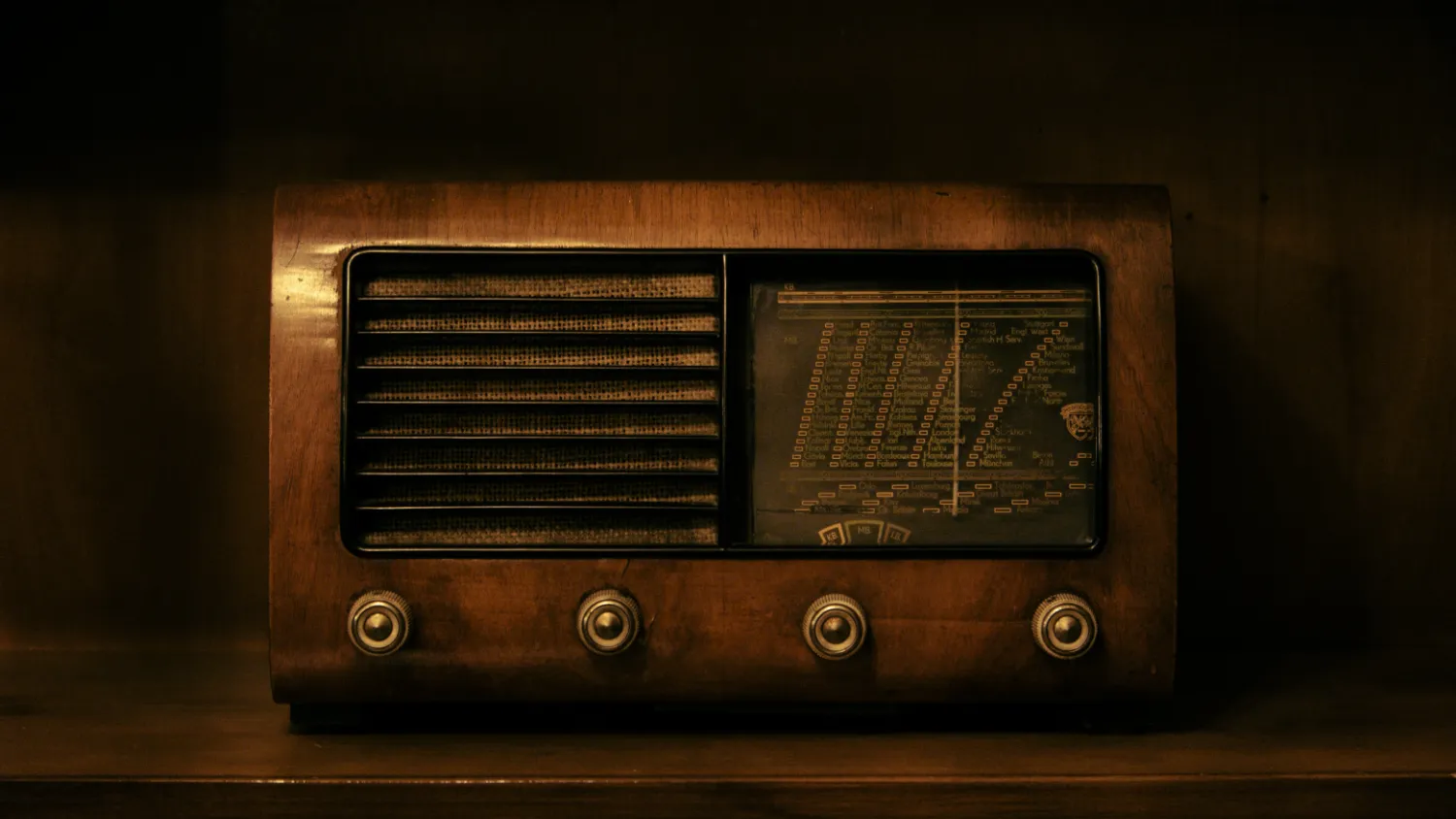
Then came radio. For the first time a brand could enter millions of homes through sound. Companies sponsored programmes, wrote jingles and created recurring characters, and advertising became part of the entertainment around daily life.
Television took it further, combining words, music, imagery, movement and storytelling. A company no longer had to explain only what a product did. It could attach the product to a lifestyle, an emotion or an aspiration.
A car could stand for freedom. A soft drink for youth. A luxury product for status. A household product for family and care.
People do not always buy products for what they do. They buy what those products represent.
Branding became bigger than the product
As markets grew more competitive, a good product stopped being enough on its own. Two companies could sell near-identical things and still be seen very differently. One is trusted more, one is more memorable, one feels more premium, one has the stronger reputation.
A brand is not a logo or a colour palette. It is the set of associations people build around a company over time, and everything contributes: advertising, product experience, service, packaging, employees, reviews.
The brand increasingly lived in the customer's mind rather than in anything the company directly controlled.
The internet changed who controlled information
For decades brands largely controlled the conversation. They bought the space, made the campaigns and decided what audiences saw. The internet reversed the direction of information.
Companies could publish directly. Customers could research independently, compare products in minutes, read reviews, find problems in forums and get recommendations from communities with no involvement from the brand at all.
Marketing became less about telling people what to think, and more about being present when they went looking. Search made that distinction sharper still.
Search changed what marketing was trying to achieve
Traditional advertising interrupts someone with a message. Search let a company appear when someone was already looking for an answer.
A billboard says here is our company. A search says I have a problem, can you help me. That difference in intent transformed digital marketing.
Companies started building websites, guides, comparison pages and product information around what people were actually searching for. SEO emerged as a discipline because visibility now depended on being relevant to a question, not only on buying attention.
The opportunity moved from interrupting to being useful at the moment of need.
Social media gave everyone a voice
The internet had already given customers access to information. Social media gave them distribution.
A customer could publish a review that reached thousands. A complaint could be made public. A creator could shift purchasing decisions without ever working for the brand. A campaign could travel far beyond the audience anybody paid to reach.
Brands were no longer the only publishers in the conversation. Companies could still make messages, but not control what happened to them afterwards. Reputation became more visible, community mattered more, and attention fragmented across platforms.
Data turned marketing into a measurable function
Digital marketing brought something else: measurement at scale. An impression could become a click, a click a visit, a visit a lead, a lead an opportunity, an opportunity a customer.
That created performance marketing. Teams could test audiences, creative, landing pages and offers, move budget towards what worked, and review results far faster than traditional media allowed.
Measurement also created a temptation. If something cannot easily be measured, it starts to look less valuable. That is dangerous. Recognition, reputation, trust and long-term preference rarely appear neatly inside a monthly dashboard.
The modern marketer has to hold two things at once: what can be measured immediately, and what creates value over time.
AI is changing how people discover companies
Marketing is now entering another transition. People increasingly use AI systems to research questions, compare options and understand unfamiliar subjects.
Instead of typing marketing agencies Pune, someone asks which marketing agencies in Pune suit a B2B company trying to build demand. The difference is subtle and important: the user is no longer asking for a list of websites. They are asking the system to research, interpret and recommend.
For decades marketers asked how do we rank. Another question is becoming just as important: how do we become part of the answer? That is why AI search visibility and generative engine optimisation are moving up the agenda.
The technology is new. The marketing problem is not. A company still needs to be known, trusted and relevant enough to be considered.
What has actually changed?
Look at the whole history and the pattern is clear. The tools changed because the way people communicate changed.
- The printing press created scale
- Newspapers created mass advertising
- Radio created broadcast communication through sound
- Television added visual storytelling
- The internet made communication interactive
- Search introduced discovery driven by intent
- Social media made customers publishers
- Analytics made marketing measurable
- AI is changing how people discover and evaluate information
Yet the questions underneath have barely moved.
- How do I get noticed
- Why should someone choose me
- How do I prove I can deliver
- How do I become memorable
- How do I earn trust
- How do I bring customers back
That is why the history is worth knowing. Technological change does not remove the principles. It changes the conditions they operate in.
From shouting to listening
There is an interesting pattern running through all of it. Early marketing was largely shouting.
A merchant called out across a marketplace. Mass advertising did the same thing at a larger scale. Radio and television amplified the voice. Digital advertising made the aim more precise.
Search reversed the direction. Rather than asking people to listen, a business could answer what they were already asking. Social media made it conversational. AI is making it answer-oriented.
Shout, broadcast, target, respond, engage, understand, answer.
That last stage is the interesting one. If AI becomes a major interface between people and information, companies will need to think less about how they advertise and more about whether their expertise, information and reputation are strong enough to be part of an answer.

Where marketing goes next
The next era will not simply be about adding more technology. Technology is already making content, media buying, analysis and automation faster. That creates its own problem.
When everyone can produce more, production stops being scarce. A company can generate hundreds of articles. A brand can post thousands of times. A tool can write dozens of campaign variations in minutes. Producing something is not the same as making anyone care about it.
As content gets easier to make, other things become more valuable:
- Original thinking
- Credibility
- Distinctive brands
- Genuinely useful information
- Original research
- Human judgement
The more technology helps companies produce communication, the more it matters to have something worth communicating.
The ancient merchant would recognise modern marketing
Imagine taking Arun from that marketplace and dropping him into 2026. Give him a website, an ads account, a LinkedIn page, an Instagram profile, an analytics dashboard and an AI writing tool. He would probably be overwhelmed by all of it.
Then explain the problem. You have competitors selling similar bowls. You need people to notice yours, understand why they are better, trust you, and come back.
He might look at the technology for a moment, then ask a very simple question.
So I still need to sell the bowl?
Exactly. The marketplace has changed. The channels, the speed, the data and the competition have all changed. The job has not: help the right person understand why they should choose you.
Final takeaway
The evolution of marketing is not really a story about advertising. It is a story about how people communicate value while technology keeps changing the way others discover, evaluate and choose.
From a merchant trying to attract a customer in a crowded marketplace to a company trying to appear in an AI-generated answer, the central challenge stays familiar. Get noticed. Be relevant. Give people a reason to choose you. Build trust. Deliver what you promised. Stay memorable after the transaction is over.
The next generation of marketing will have more tools than any before it. More tools will not automatically produce better marketing. The brands that stand out will be the ones that understand the thing technology cannot replace: what people actually care about.